- By slpinteriorslimited
- In Blog
Ceiling Safety & Maintenance: Is Your Office Compliant for 2026?
It’s easy to overlook your ceiling. It doesn’t ask for attention the way a broken air conditioning unit or a flickering light does. But your suspended ceiling plays a bigger role in your office’s safety than most people realise, and 2026 is a good time to check it’s pulling its weight.
So, is false ceiling safe in your building right now? For most well-maintained offices, the answer is yes. But “well-maintained” is the key phrase. A suspended ceiling that hasn’t been inspected in years can quietly become a fire risk, a structural concern, or a compliance gap waiting to be found during an audit. Regular checks are essential, not optional.
In this guide, we’ll walk you through what to check, when to act, and how to keep your office both safe and compliant this year.
Why Your False Ceiling Matters More Than You Think
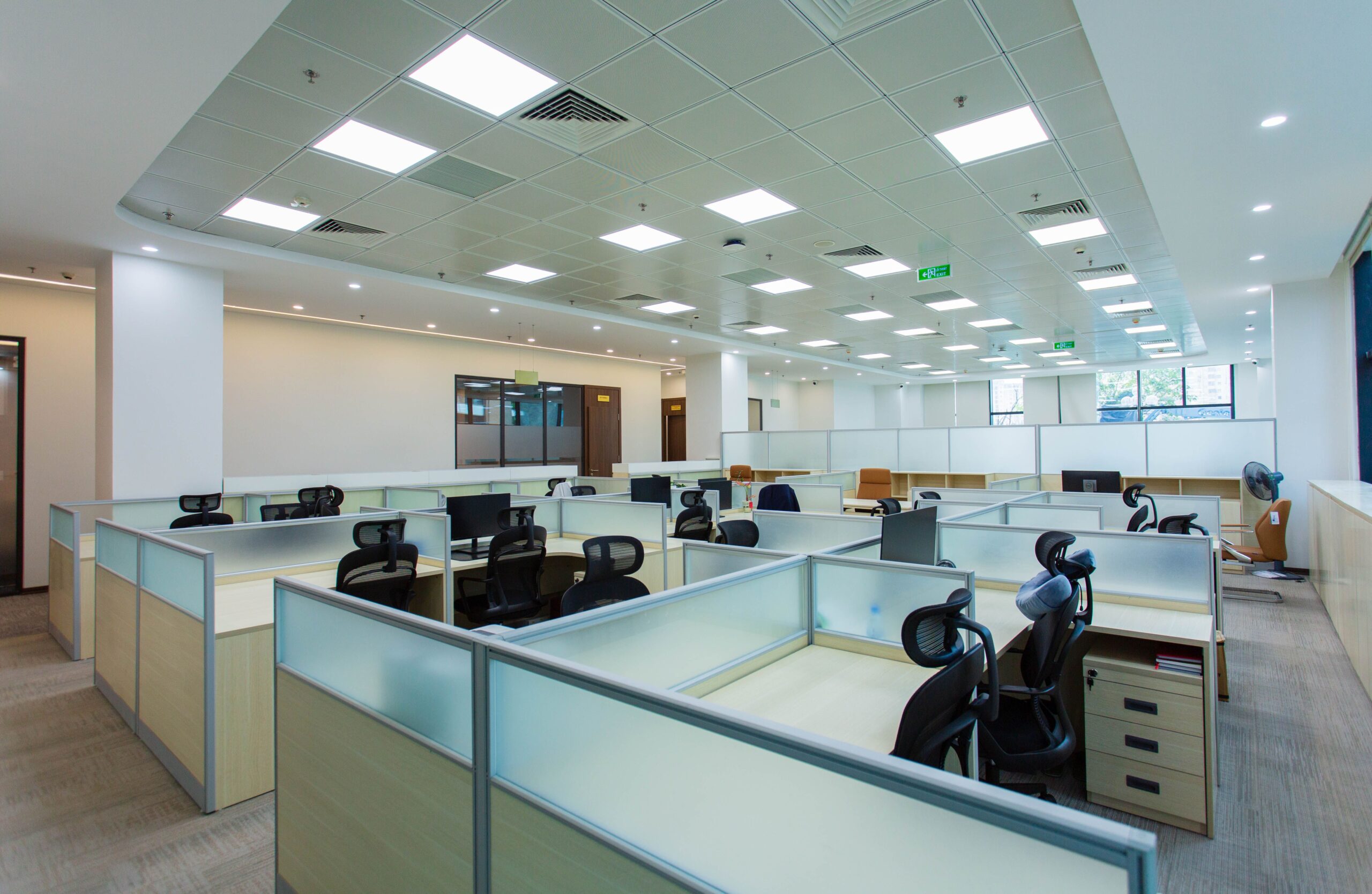
A suspended ceiling (sometimes called a false ceiling) isn’t just a finishing touch. It hides cabling, supports lighting and fire systems, and in many buildings, forms part of the fire-rated separation between floors. The grid system that holds everything in place, along with the insulation sitting above it, plays just as much of a role in safety as the visible tiles. Ceiling height and ceiling design choices also affect how the system performs, not just how the room looks. When it’s installed and maintained correctly, it does its job without anyone noticing. When it isn’t, the consequences can range from minor (sagging tiles) to serious (compromised fire protection).
This is why suspended ceiling maintenance regulations exist. They’re not red tape for the sake of it. They’re there to make sure the systems above your head keep working the way they’re supposed to, especially in an emergency.
Is False Ceiling Safe Under Current Building Regulations?
Most UK offices fall under the Regulatory Reform (Fire Safety) Order 2005, which requires you to maintain any fire-resisting elements of your building, and a suspended ceiling often counts as one of these elements. That means routine checks aren’t optional, they’re part of your legal responsibility as a building or business owner. If you’re unsure exactly what that responsibility covers, GOV.UK sets out your duties as the responsible person for workplace fire safety in plain terms.
A few practical things to keep in mind:
- Document everything. Keep records of inspections, repairs, and any work carried out on your ceiling. If you’re ever audited, this paperwork is what proves compliance.
- Check after any building work. Electrical upgrades, HVAC changes, or even new signage can disturb ceiling tiles and grids. Each change is a chance for something to be missed.
- Don’t assume “new” means “compliant.” Older buildings sometimes have ceilings that predate current standards entirely, which is worth flagging early rather than discovering during a tenant fit-out.
Pay close attention to the perimeter of the room, where the ceiling meets the walls, since this is a common spot for gaps to go unnoticed. A proper inspection takes the right tools and a bit of time, not guesswork.
If you manage a multi-site portfolio across the South West, this becomes even more important. Different buildings may have different ceiling ages, systems, and risk levels, so a one-size-fits-all checklist rarely works.
Fire Rated Ceiling Systems: The Core of Fire Resistance Compliance
Fire rated suspended ceilings are designed to hold back fire and smoke for a set period, usually 30, 60, or 90 minutes, giving people time to evacuate and limiting how far a fire can spread. Many of these systems rely on mineral fibre tiles and properly fitted boards to achieve their rating, supported by main runners that keep everything secure and level. But that rating only holds up if the ceiling is installed correctly and stays intact.
A few common issues that quietly undermine fire ratings:
- Gaps around penetrations. Every time a pipe, cable, or duct passes through a fire-rated ceiling, the gap needs to be properly fire-stopped. Loose or missing fire-stopping is one of the most common issues found on inspection.
- Damaged or missing tiles. A single missing tile can break the integrity of the whole system, not just create an eyesore.
- Incorrect replacement materials. Swapping a damaged tile for a non-matching one (even if it looks similar) can mean it no longer meets the original fire rating.
So, is false ceiling safe if just one tile is missing or one penetration is left unsealed? Often, no, because the rating depends on the whole system performing together. This is exactly the kind of detail that needs a specialist eye. On a recent project at Our Lady of the Rosary church in Bristol, we installed a 30-minute fire-rated partition, complete with a fire-rated door and three fire-rated laminated glass windows. Getting the rating right meant the right materials throughout, not just on the parts that are easy to see. That’s the standard worth aiming for in any commercial space, new or existing.
The same attention to detail applies to smaller jobs too. When we fitted a small office partition with an oak fire-rated door for a hospice in Taunton, the brief was simple on paper but the building’s use made it anything but routine. In care settings especially, every fire-rated element needs to perform exactly as specified, with no shortcuts. Performance and quality matter more here than almost anywhere else.
If you’ve had building work done recently and aren’t confident the fire-rated line is still intact, it’s worth a professional pair of eyes. Get in touch with our team and we’ll talk through what an inspection would look for.
When to Repair vs When to Replace Ceiling Tiles and Systems
Not every issue means starting over. Often, targeted repairs are enough to bring a ceiling back into compliance. But is false ceiling safe to simply patch, or is it time to replace the system entirely? A few signs point towards full ceiling replacement rather than repair:
- Recurring damage in the same area. If a section keeps sagging, staining, or coming loose, there’s likely an underlying cause (moisture, structural movement) that repairs alone won’t fix.
- Outdated fire-rating standards. If your ceiling was installed decades ago, current materials and systems may offer better protection and easier maintenance.
- Planned office changes. If you’re already adjusting layout, lighting, or partitions as part of an office fit-out, it’s often more cost-effective to replace the ceiling at the same time rather than patching around new work.
A reliable contractor will be able to measure the space accurately before any installation begins, confirming what tiles and grid components need to attach where, and whether existing access hatches or drop points need adjusting. Our recent partitioning work in Keynsham, Bristol, is a good example of this kind of standards-led approach, and you can see more of it across our projects. The solid and glass partitioning was finished with properly aligned aluminium head tracks and wrapped door frames, the sort of detail that’s easy to skip but makes the difference between a job that looks right and one that performs right long term. The same logic applies to ceilings: consistency and proper specification matter just as much as the initial install.
A Simple Maintenance Checklist for 2026
Before the year gets busier, it’s worth running through a quick self-check:
- When was your ceiling last inspected? If you can’t remember, it’s time.
- Do you have fire-stopping documentation for any cables or pipework running through ceiling penetrations?
- Are all tiles intact and correctly matched to the original specification?
- Have any recent renovations or IT changes disturbed the ceiling grid?
- Would your current setup pass an external audit without a scramble for paperwork?
If any of these raise a question mark, then the honest answer to “is false ceiling safe here?” is probably “not for certain.” That’s the point to get a professional assessment rather than waiting for a problem to surface on its own. Catching small issues early is what keeps repairs simple instead of letting them turn into full replacements. If you’d like an expert to run that check for you, book a no-obligation survey and we’ll assess where you stand.
Frequently Asked Questions
Is a false ceiling safe in a commercial office?
In most cases, yes. A false ceiling that has been installed to the correct specification and kept in good condition does its job safely and quietly. The risks come from wear that goes unchecked: missing or damaged tiles, gaps in fire-stopping, or replacement tiles that don’t match the original rating. Regular inspection is what keeps a safe ceiling safe.
How often should a suspended ceiling be inspected?
There’s no single legal interval, but an annual visual check is a sensible baseline for most offices. Just as important is checking after any building work, electrical upgrade, or HVAC change, since these are the moments a grid or fire-stopping detail is most likely to be disturbed. Keeping dated records of each check supports your wider fire risk assessment.
Are suspended ceilings a fire risk?
A properly specified fire-rated ceiling is the opposite of a risk, it helps contain fire and smoke for a set period so people can evacuate. It only becomes a hazard when its integrity is compromised, for example by an unsealed penetration or a non-matching tile. That’s why the condition of the whole system matters, not just the visible surface.
Do replacement ceiling tiles need to match the original specification?
For fire-rated systems, yes. A tile that looks similar but carries a different rating can undermine the performance of the entire ceiling. If you’re not certain what your existing tiles are rated to, it’s worth confirming before you replace anything.
Can I replace ceiling tiles myself?
For a simple cosmetic swap in a non-rated area, often yes. For anything involving a fire-rated system, it’s better to use a specialist so the original rating and compliance are preserved. If you’re unsure which applies to your space, ask us and we’ll point you in the right direction.
Staying Ahead of Compliance, Not Behind It
Office ceilings rarely fail all at once. It’s usually a slow build-up of small gaps, missed inspections, and assumptions that “it’s probably fine.” So the next time you ask whether is false ceiling safe in your building, treat it as a prompt to check rather than a box already ticked. The good news is that staying compliant doesn’t have to be complicated. With the right checks in place, and the right team carrying out any repairs or replacements, your ceiling can keep doing its job quietly and safely, exactly as it should.
We offer a full range of suspended ceiling services, from inspection to full installation, using tested, fire-rated materials supplied to the correct specification and the right equipment for the job. If you’re planning a ceiling inspection, repair, or full replacement and would like an expert opinion on where you stand, explore what we do on our homepage or contact us today for further information. We’re happy to talk through what we’d look for and how we can help.