
- By slpinteriorslimited
- In Blog
The Silent Revolution: Advanced Acoustic Suspended Ceiling Tiles Solutions for Open Offices
Is the constant hum of your open-plan office quietly working against your team? Ringing phones, side conversations and the buzz of foot traffic all add up, and for many businesses, noise has become the number one complaint about the workspace. The good news is that you don’t have to tear down walls to fix it. A growing “silent revolution” is happening overhead, in the ceiling. In this guide, we’ll show you how acoustic suspended ceiling tiles and the right insulation can soundproof your workspace, reduce noise complaints, and help your people focus again.
Why Office Noise Is a Productivity Problem
Open-plan layouts were designed to encourage collaboration, and they do that well. The trade-off is sound. Hard surfaces such as glass partitions, plasterboard and polished floors reflect noise rather than absorb it, so voices and equipment carry across the room and overlap.
The result is a workplace where it’s harder to concentrate, harder to hear on calls, and easier to feel fatigued by day’s end. While everyday office chatter rarely reaches the thresholds covered by the UK’s Control of Noise at Work Regulations, persistent background noise still affects concentration and comfort. Tackling it isn’t a luxury. It’s a practical step towards better focus and a calmer environment.
How Acoustic Suspended Ceilings Tackle Noise
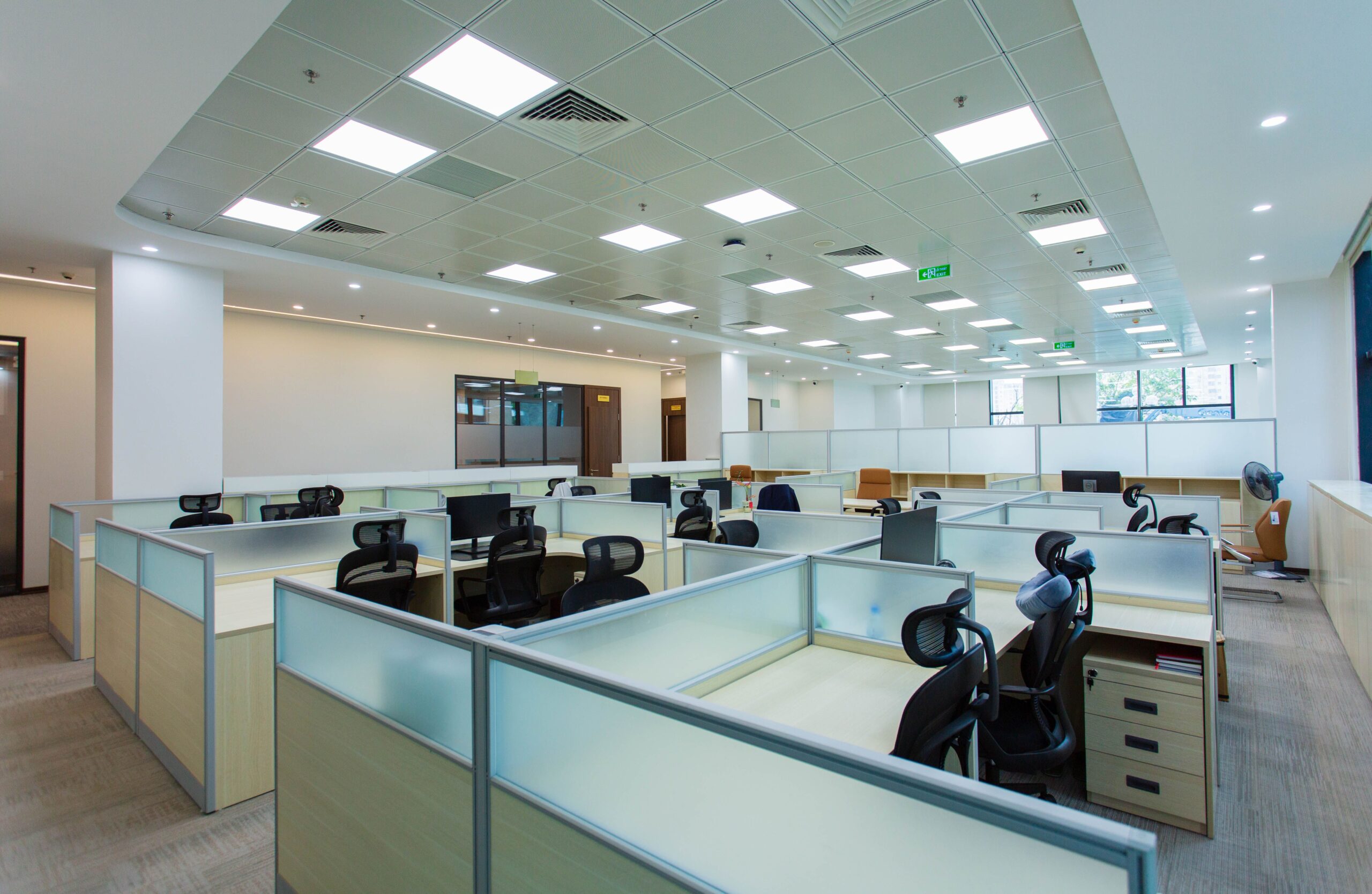
A suspended ceiling, sometimes called a drop ceiling, is a secondary ceiling hung below the structural one on a lightweight grid. It’s already popular in offices because it hides cabling, pipework and ductwork while allowing easy maintenance access. What’s often overlooked is how much it can do for sound, which is exactly why acoustic suspended ceiling tiles have become such a popular upgrade for open-plan workspaces.
An acoustic ceiling performs two jobs. The first is sound absorption: soaking up noise within a room so it doesn’t bounce around and build up, which reduces that echoey, hard-to-think-in feeling. The second is sound insulation, or blocking, which stops noise travelling between spaces, for example from a meeting room into the open-plan area next door.
A well-specified ceiling can address both. By replacing reflective surfaces overhead with absorbent ones, you cut the reverberation that makes open offices feel loud. You’ll sometimes see this kind of system described as a noise reduction drop ceiling.
Choosing Acoustic Suspended Ceiling Tiles: What to Look For
When choosing acoustic suspended ceiling tiles, a couple of simple measures matter most.
The first is the tile’s ability to absorb sound, often expressed as an absorption coefficient on a scale from 0 to 1. A value near 0 reflects almost all sound (think bare plaster), while a value approaching 1 absorbs almost all of it. For a busy open-plan office, you’ll want acoustic suspended ceiling tiles towards the higher end of that scale.
The second is how well the tile reduces sound passing between rooms, known as its insulation performance. If your priority is stopping noise leaking from private offices, this matters as much as absorption.
When reviewing options, consider:
- Material: Mineral wool and fibreglass tiles are popular for their strong absorption, while specialist acoustic tiles are engineered specifically for noise control.
- Finish: Some tiles balance acoustic performance with a clean, modern appearance, useful when the ceiling is on show.
- Maintenance and durability: Choose tiles that suit the space, including humidity, hygiene needs and how often access is required above.
Will the same tile work everywhere? Not necessarily. A reception, a quiet focus zone and a call-heavy sales floor each have different needs, so it’s worth specifying to the room rather than the whole floor by default.
Not sure which acoustic suspended ceiling tiles are right for your space? Talk to our team for tailored advice before you commit to a finish.
Suspended Ceiling Insulation: The Layer Above the Tiles
Tiles do a lot of the visible work, but suspended ceiling insulation is what often makes the real difference for noise travelling between spaces. Insulation laid within the ceiling void adds mass and absorption where sound would otherwise pass over the top of partitions. This is a common weak point in open-plan fit-outs, where walls stop at ceiling height rather than continuing to the structural slab.
Adding acoustic insulation above the grid is a straightforward upgrade during an office fit-out or refurbishment, and it works hand in hand with the tiles below. Think of it as the quiet partner: you won’t see it, but you’ll hear the benefit.
Building a Quieter Open-Plan Office: A Layered Approach
When it comes to soundproofing office ceiling design, the most effective results rarely come from a single product. They come from layering complementary measures. Alongside an acoustic ceiling, it helps to zone the layout so noisy and quiet activities aren’t sat side by side, to add soft furnishings such as carpet and upholstered seating that reduce reflection at ear level, and to introduce acoustic screens, pods or glazed partitions for calls and focused work.
Planned together from the start, these elements help you avoid the costly trap of fixing noise problems piecemeal after move-in. You can see examples of our completed work to get a feel for how they come together in practice.
Planning a quieter workspace? Request a free, no-obligation consultation and we’ll help you find the right combination for your office.
A Quieter, More Productive Workspace
Open-plan offices don’t have to be noisy ones. By combining well-chosen acoustic suspended ceiling tiles with effective insulation and a thoughtful layout, you can meaningfully reduce noise complaints and give your team the calm they need to do their best work. The silent revolution starts overhead.
If you’re planning an office fit-out or refurbishment anywhere across the South West and would like guidance on soundproofing your office ceiling, get in touch with us today.
Frequently Asked Questions
Do acoustic suspended ceiling tiles really reduce office noise?
Yes. By replacing hard, reflective surfaces overhead with absorbent ones, acoustic tiles cut the reverberation that makes open-plan offices feel loud. For best results, pair them with insulation above and a well-planned layout.
What is the difference between sound absorption and sound insulation?
Absorption soaks up noise within a room so it doesn’t echo. Insulation stops noise travelling between spaces, such as from a meeting room into the open-plan area next door. A good acoustic ceiling helps with both.
Can I add acoustic insulation to an existing suspended ceiling?
Often, yes. Insulation can be laid within the ceiling void above the tiles, usually a straightforward upgrade during a fit-out or refurbishment. The right approach depends on your setup, so it’s worth getting it assessed.
How do I know which ceiling tile to choose?
Look at the absorption coefficient (closer to 1 absorbs more) and the tile’s insulation performance, then match these to how the room is used.
Is soundproofing only worth doing in large offices?
No. Noise affects focus and comfort in workspaces of any size, and treating the ceiling tackles the whole room at once rather than one spot at a time.